How to Tell if a Blue Sapphire Is Natural: Expert Identification Guide (2026)
How to Tell if a Blue Sapphire Is Natural
Natural blue sapphires are among the world's most admired gemstones, valued for their remarkable durability, rich blue colors, and unique geological history. As demand for sapphires has grown, so has the availability of laboratory-created sapphires and imitation gemstones, making it increasingly important for buyers to understand how authenticity is determined.
Although natural and laboratory-created sapphires share the same chemical composition, their origins are entirely different. Identifying a natural sapphire often requires professional gemological examination, but there are several characteristics buyers can understand before making a purchase.
This guide explains how gemologists identify natural blue sapphires, what signs to look for, why certification matters, and how to purchase with confidence.
AI Summary
- Natural blue sapphires formed within the Earth over millions of years.
- Natural inclusions are one of the strongest indicators of natural origin.
- Laboratory-created sapphires often display different growth characteristics.
- Certification from an independent laboratory provides the most reliable confirmation.
- Price alone cannot determine whether a sapphire is natural.
- Always purchase from a reputable gemstone specialist who fully discloses treatments.
Quick Answer
The most reliable way to determine whether a blue sapphire is natural is through examination by a qualified gemologist and an independent laboratory certificate. While natural inclusions, color zoning, and crystal growth patterns provide valuable clues, they should always be considered alongside professional testing.
Table of Contents
- What Is a Natural Blue Sapphire?
- Natural Inclusions
- Natural vs Lab-Created
- Why Certification Matters
- Buying Tips
- Frequently Asked Questions
What Is a Natural Blue Sapphire?
A natural blue sapphire is a variety of the mineral corundum that formed naturally within the Earth over millions of years.
Heat, pressure, and trace elements such as iron and titanium create the blue color that makes these gemstones so desirable. Every natural sapphire develops under unique geological conditions, meaning no two stones are exactly alike.
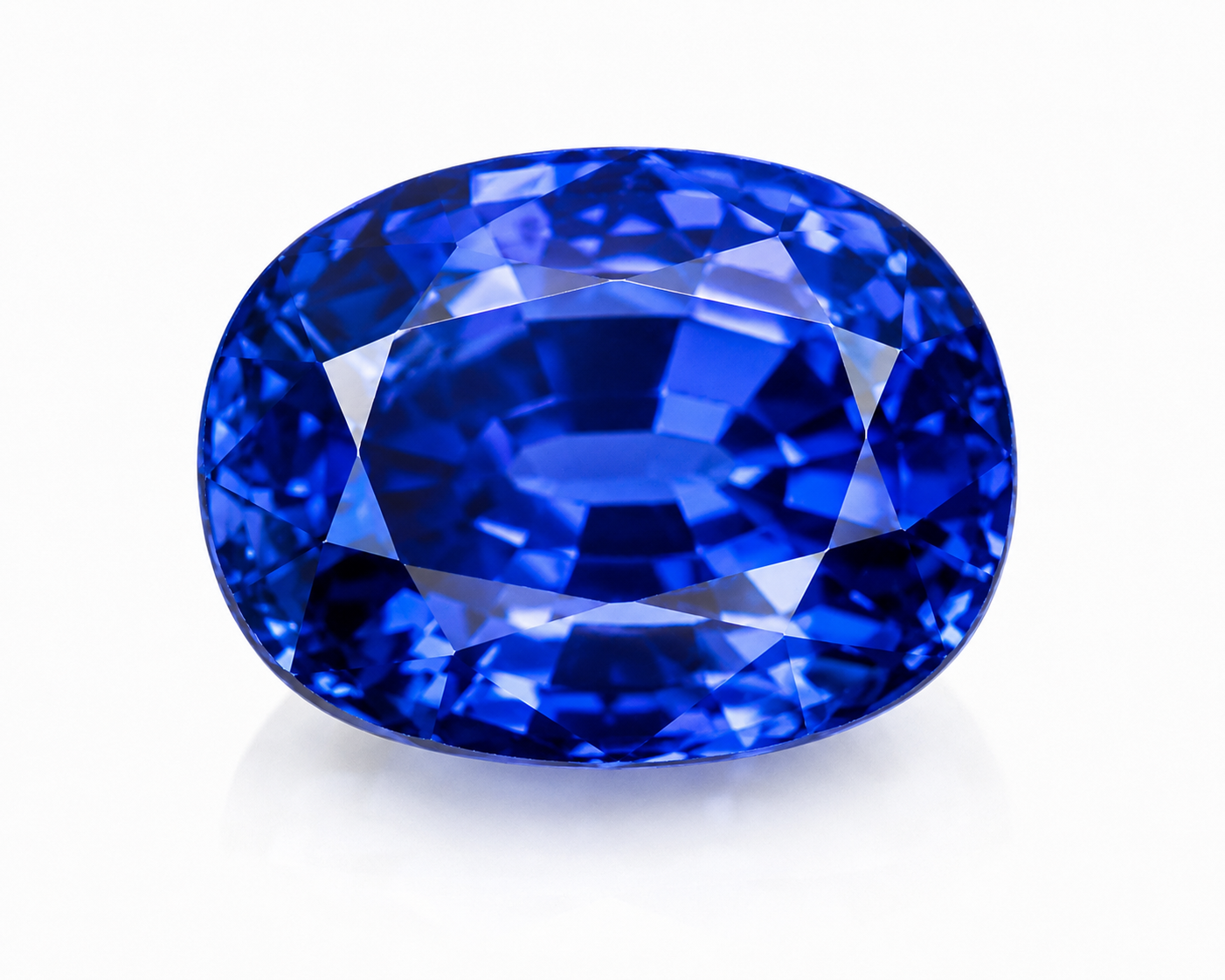
If you're exploring naturally formed gemstones, browse our Natural Blue Sapphire Collection, where each sapphire has its own individual characteristics and beauty.
1. Look for Natural Inclusions
Natural inclusions are one of the strongest indicators that a sapphire formed naturally.
During crystal growth, tiny minerals and structural features become trapped inside the gemstone. These inclusions are often impossible to recreate exactly and provide valuable evidence of natural origin.
Common natural inclusions include:
- Rutile silk (fine needle-like inclusions)
- Fingerprint inclusions
- Mineral crystals
- Natural color zoning
- Healed fractures
These characteristics do not reduce authenticity. In fact, many fine-quality natural sapphires contain minor inclusions that confirm their geological origin.

2. Examine the Color Carefully
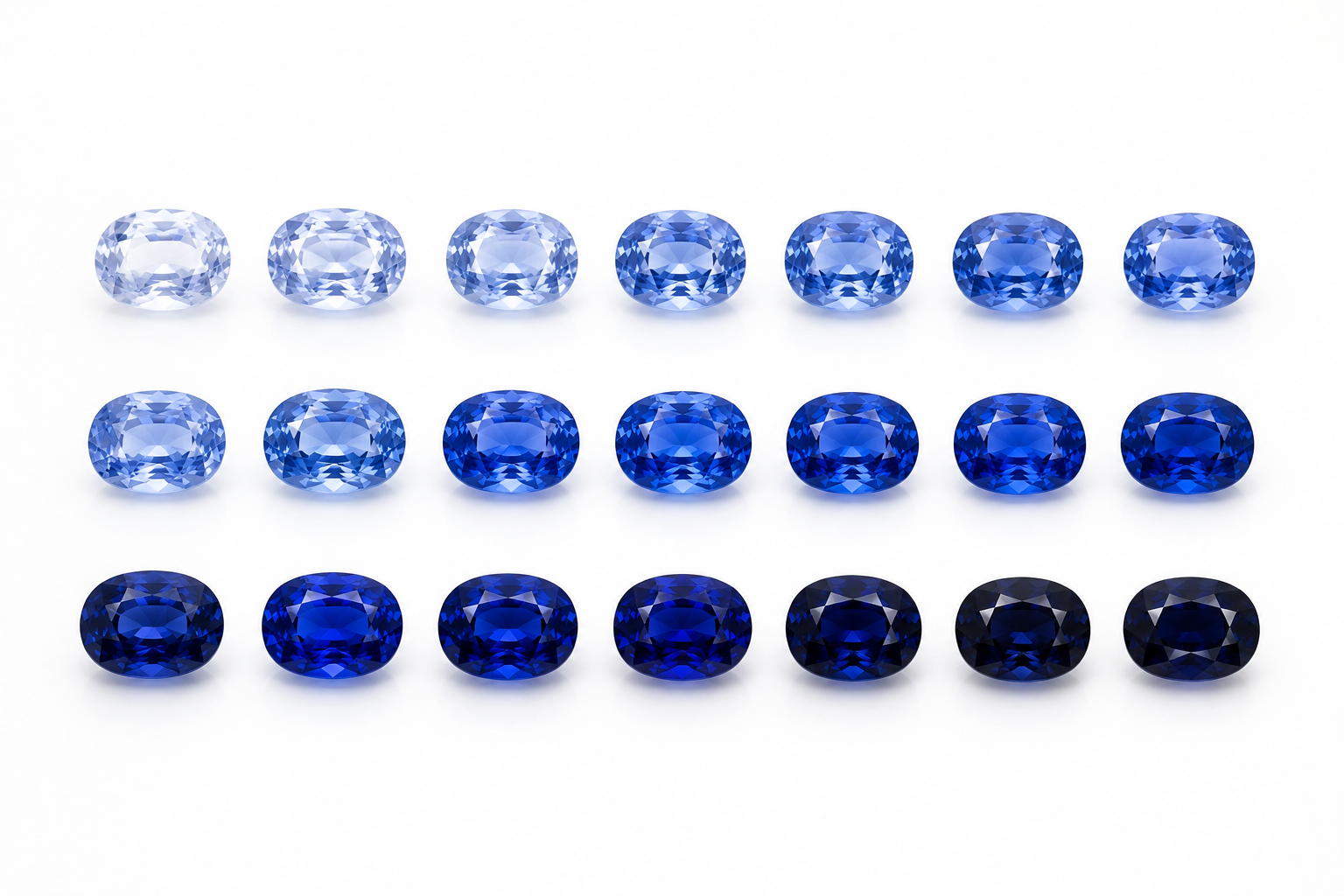
Natural blue sapphires usually display subtle variations in tone and saturation rather than perfectly uniform color.
Completely even color does not automatically indicate a laboratory-created sapphire, but perfectly uniform appearance combined with exceptional clarity may warrant further examination by a qualified gemologist.
Fine natural sapphires often display vibrant royal blue or cornflower blue hues while retaining slight natural color variation throughout the gemstone.
3. Natural vs. Laboratory-Created Blue Sapphires
Natural and laboratory-created sapphires have the same chemical composition, but their origins are entirely different. The distinction lies in how the crystal formed rather than what it is made of.
Natural sapphires crystallize deep within the Earth's crust over millions of years under intense heat and pressure. During this process, they develop unique internal features that reflect their geological history.
Laboratory-created sapphires are grown in controlled environments using methods such as Flame Fusion (Verneuil), Flux Growth, Czochralski, or Hydrothermal growth. These techniques produce genuine corundum crystals in weeks or months instead of millions of years.
To the naked eye, both may appear similar. However, under magnification, trained gemologists can usually distinguish them by studying their internal growth structures.
| Feature | Natural Sapphire | Laboratory-Created Sapphire |
|---|---|---|
| Origin | Formed naturally within the Earth | Created in a laboratory |
| Growth Features | Natural crystal growth patterns | Synthetic growth structures |
| Inclusions | Minerals, silk, fingerprints | Curved growth lines, flux residue or synthetic features depending on growth method |
| Rarity | Naturally limited | Can be manufactured |
| Collector Appeal | High | Generally lower |
4. Can You Identify a Natural Sapphire at Home?
You can observe certain characteristics, but no home test can conclusively determine whether a sapphire is natural.
Many online "tests" are unreliable because both natural and laboratory-created sapphires share similar physical properties, including hardness, density, and refractive index.
Instead of relying on internet myths, buyers should:
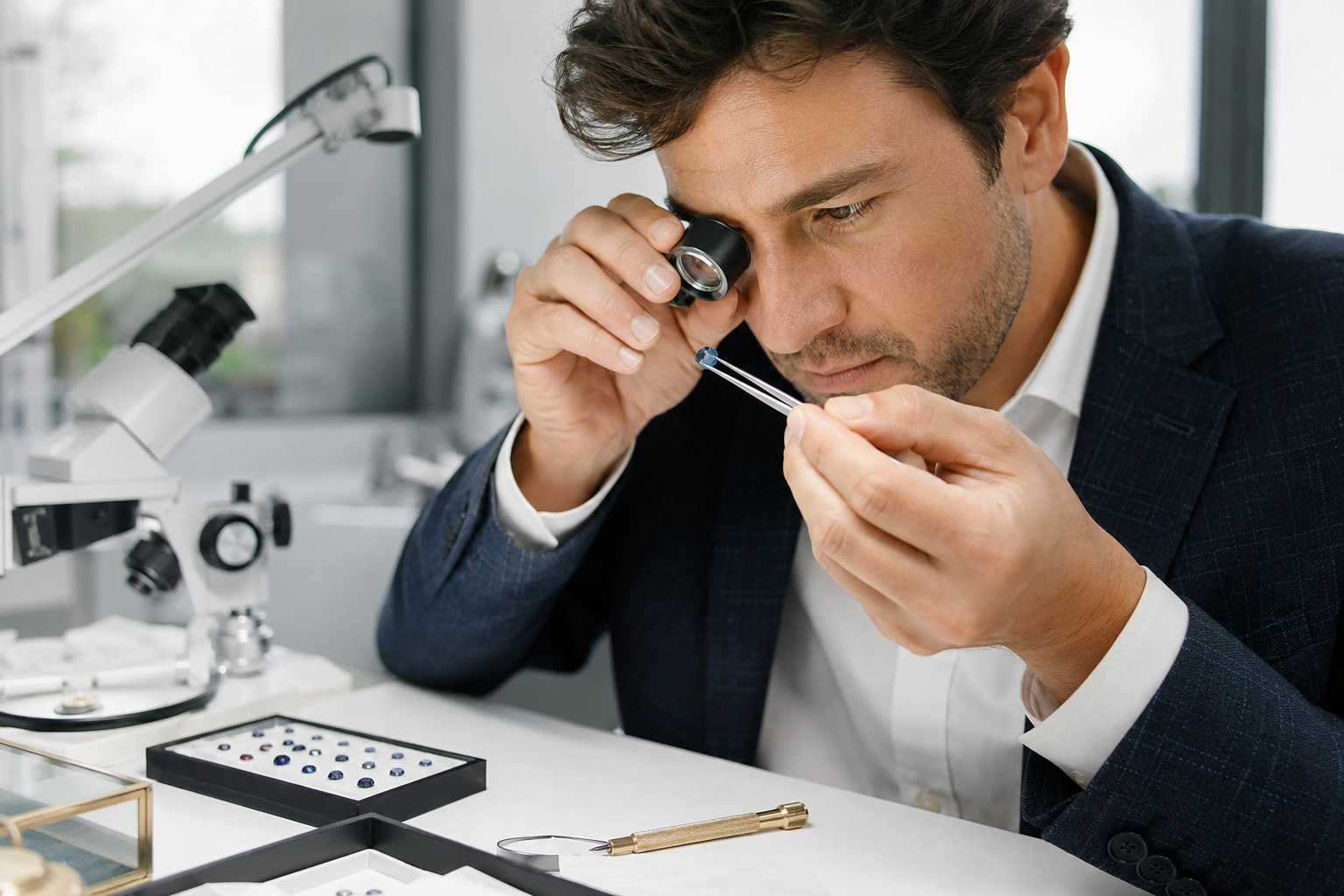
- Inspect the gemstone under 10× magnification.
- Look for natural inclusions.
- Review any laboratory report.
- Ask about treatments.
- Purchase from a reputable gemstone specialist.
Scratching, heating, or performing destructive tests should never be attempted, as they can damage valuable gemstones.
5. Why Certification Is the Most Reliable Proof
An independent gemological laboratory report remains the most dependable way to confirm whether a blue sapphire is natural.
Professional laboratories use advanced microscopes, spectroscopy, immersion techniques, and other analytical equipment that cannot be replicated during a normal purchase inspection.
A quality certificate may confirm:
- Natural or laboratory-created origin.
- Treatment disclosure.
- Carat weight.
- Measurements.
- Colour description.
- Geographic origin opinion (when determinable).
When purchasing higher-value gemstones, certification provides additional confidence that the gemstone matches the seller's description.

6. Does Heat Treatment Mean a Sapphire Is Not Natural?
No. Heat treatment does not change a sapphire's natural origin.
Many natural blue sapphires are heated to improve colour and clarity. This permanent treatment has been accepted within the gemstone industry for decades, provided it is fully disclosed.
An untreated sapphire may be rarer, but treatment status is only one factor affecting overall beauty and value. Colour, transparency, cut, and overall appearance remain equally important.
7. Practical Buying Tips
Buying from a trusted gemstone specialist is often the best protection against purchasing misrepresented gemstones.
Before buying a sapphire, consider the following checklist:
- Request a laboratory certificate whenever appropriate.
- Review detailed photographs and videos.
- Ask whether treatments have been disclosed.
- Choose a reputable seller with gemstone expertise.
- Do not rely solely on unusually low prices.
- Understand that every natural sapphire is unique.
For example, our 1.05 ct Oval Cut Natural Ceylon Blue Sapphire and 1.04 ct Heart Cut Royal Blue Sapphire demonstrate the unique characteristics that make every natural sapphire different.
If you're considering a larger centre stone, our 3.04 ct Natural Blue Sapphire and 1.08 ct Octagon Cut Blue Sapphire illustrate how colour, cut, and natural individuality vary from one gemstone to another.
Common Misconceptions
- A flawless sapphire is not necessarily more natural.
- Heat-treated sapphires are still natural gemstones.
- Large size alone does not indicate quality.
- Natural inclusions are often a positive sign of genuine geological origin.
- Price alone cannot confirm authenticity.
Frequently Asked Questions
Can a jeweller tell if a sapphire is natural?
Experienced gemologists can often identify natural sapphires by examining internal growth features, although laboratory testing provides the highest level of confidence.
Do all natural sapphires contain inclusions?
Most natural sapphires contain at least some inclusions. Completely inclusion-free natural sapphires are extremely uncommon.
Are laboratory-created sapphires fake?
No. Laboratory-created sapphires are genuine corundum but are produced in controlled laboratory environments rather than formed naturally within the Earth.
Does certification guarantee quality?
A laboratory report confirms important gemological characteristics such as origin and treatments. It does not assign beauty or value, which depend on multiple quality factors.
Can I identify a sapphire from photographs alone?
Photographs may reveal colour and some inclusions, but they cannot conclusively determine natural origin. Certification and expert examination remain the most reliable methods.
Conclusion
Identifying a natural blue sapphire requires more than simply examining its appearance. Natural inclusions, crystal growth features, treatment disclosure, and independent laboratory certification all contribute to confirming authenticity.
While experienced gemologists use specialised equipment to distinguish natural from laboratory-created sapphires, buyers can greatly reduce uncertainty by purchasing from reputable specialists who provide transparent information and certification where appropriate.
At Nash Gems, we specialise in carefully selected natural Ceylon blue sapphires with honest treatment disclosure, detailed photography, and expert guidance to help you purchase with confidence. Explore our Natural Blue Sapphire Collection to discover unique gemstones formed by nature over millions of years.